
Can You Stay Home During Mold Remediation?
You have quotes in hand, or you are about to, and the next question is practical: can you keep living in your San Diego, CA home while the mold is removed? For many small jobs, people do. For bigger ones, or for households with someone who has asthma, a mold allergy or a new baby, it can make sense to plan a few nights elsewhere. There is no single rule, so this guide walks through the factors and the questions to ask.
The short version. Staying home is often workable when the job is small, sealed off and away from bedrooms, the kitchen and the only bathroom. Plan to be away, at least on demolition days, when the job is large, involves ducts, blocks a room you need, or someone in the home has a health concern. Ask the company in writing what it recommends for your job.
What containment does, and what it does not
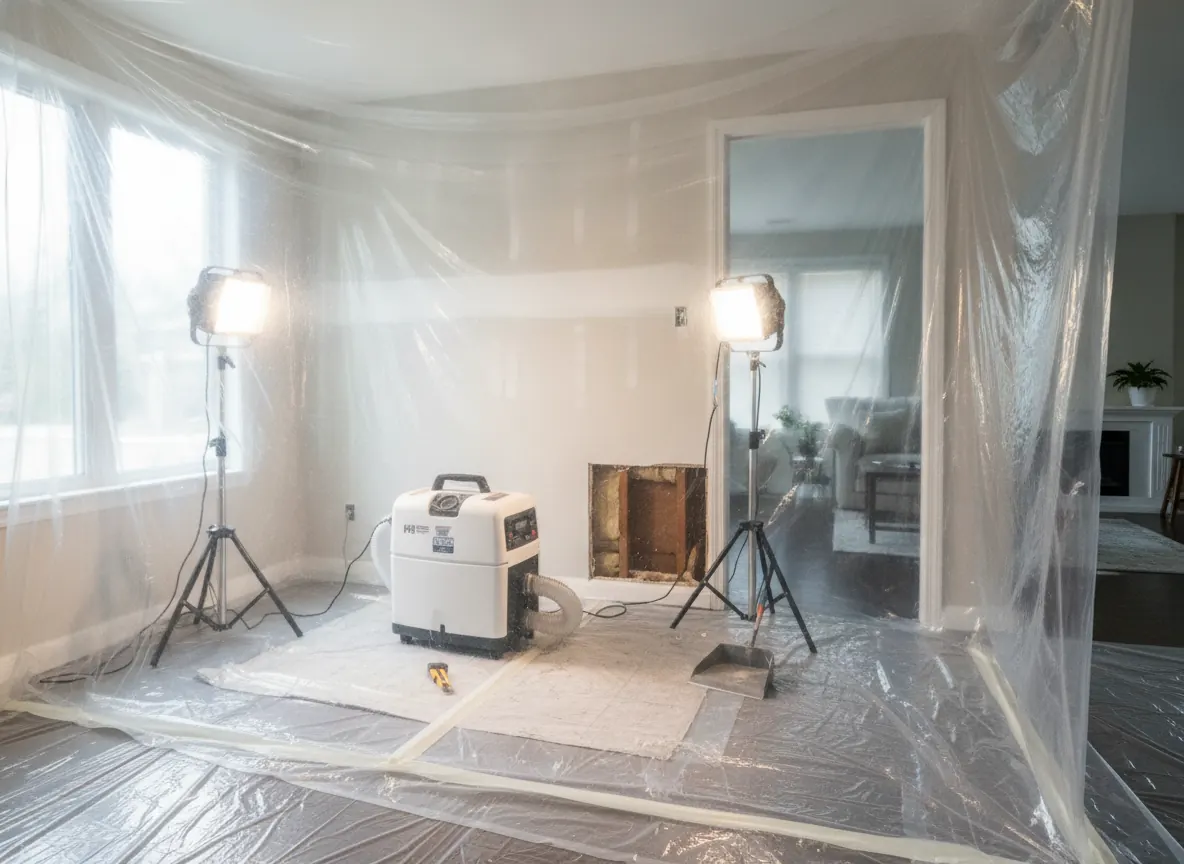
Most remediation work happens inside containment: plastic sheeting that seals the work area, a zipper or flap door, and an air filtration machine that pulls air out through HEPA filters so the area stays at slightly lower pressure than the rest of the house. The idea is that air moves into the work zone, not out of it. Damaged materials are bagged inside the containment before they leave.
Good containment is the main reason staying home can work. It does not make the work area a place to walk through, and it does not stop noise, dust on demolition days or crews coming and going. If containment is torn, opened often or set up poorly, it helps much less.
Factors that decide whether you should stay
- Size of the job. A patch behind a bathroom vanity is different from mold across a bedroom wall or a crawl space.
- Location. Work in your only bathroom, the kitchen or a bedroom changes daily life more than work in a garage or a spare closet.
- HVAC involvement. If the ducts or air handler are part of the job, the system is usually shut down, and that affects the whole house.
- Demolition. Tearing out drywall, cabinets or flooring is the loudest and dustiest part. Many people leave just for those days.
- Who lives there. CDC says that for some people, mold can cause a stuffy nose, sore throat, coughing or wheezing, burning eyes, or skin rash, and that people with asthma or who are allergic to mold may have severe reactions. Talk to a doctor about anyone in the home with breathing problems, a weak immune system, or a pregnancy.
- Older materials. Older homes may have asbestos or lead paint. If testing finds asbestos, that work follows its own rules, and the company may ask you to stay out.
- Kids and pets. Keeping them away from containment for days is harder than it sounds.
How staying home usually works
Before work starts
Clear the work area and a path to it. Move belongings from nearby rooms. Agree in writing on work hours, which doors crews will use, and where the filtration exhaust will go.
During removal
Stay out of containment. Keep doors to the work area closed. Do not run the HVAC unless the company says it is set up for that.
During drying
Fans and dehumidifiers may run around the clock. It is noisy but usually less disruptive than demolition.
Before containment comes down
Ask how the work will be checked. A visual check and moisture readings are common; some people also hire an independent party for clearance testing.
If you rent
If you live in a rental in San Diego, the landlord or the landlord's company usually arranges the work, and you will get notice before anyone enters. Under Civil Code §1941.7, the landlord may enter to repair mold with notice that complies with §1954, where 24 hours' written notice is presumed reasonable. Whether you can be asked to leave, or whether anyone pays for a hotel, depends on your lease and the situation. Talk to a tenant-rights resource or an attorney about your options. This is not legal advice. The rental, condo and HOA mold page covers tenant rights in more detail. If you live in privatized military housing, start with your housing office.
If you own a condo
Condo and apartment buildings with five or more units fall under San Diego County APCD Rule 1206 for renovation. A survey for asbestos comes before renovation, and work disturbing 100 square feet or more needs notice 10 working days ahead. That can affect when neighbors are told and how long your unit is disrupted. Your HOA may also have rules on contractor hours, parking and access, so check your CC&Rs and talk to the manager early.
Who pays if you have to leave?
California homeowners and renters policies usually exclude mold, while sudden and accidental water damage is usually covered and seepage and leaks are not (California Department of Insurance guide, January 2026). If your mold traces back to a covered water loss, ask your insurer whether loss-of-use coverage applies. Check your declarations page, keep receipts, and get any answer in writing. Never assume a hotel stay is covered. The homeowners insurance guide goes through the CDI wording.
Questions to ask before you decide
- Will the HVAC system be off, and for how many days?
- Which days are demolition days, and how loud and dusty will they be?
- Will any bathroom, the kitchen or a bedroom be unusable, and for how long?
- How will you seal containment, and where does the filtered air exhaust?
- Do we need asbestos or lead testing before tear-out?
- What do you recommend for children, pets and anyone with asthma?
- Who checks the work before containment comes down?
California does not license mold inspection or remediation as its own trade, so checking credentials is up to you. The CSLB license classifications include no mold class. Check the CSLB license number for any repair work of $1,000 or more, and ask about IICRC or ACAC certifications and insurance certificates. For how long each stage tends to run, see How long does mold remediation take? The mold removal page explains what a typical scope includes.
Common questions
Is it safe to stay in the house during mold remediation?
Often, for a small job that is well contained, many people do. It depends on the size of the job, where it is, whether the HVAC system is involved and who lives in the home. CDC says people with asthma or mold allergies may have severe reactions, so ask a doctor if someone in the home has those conditions.
Should I turn off the air conditioning during mold removal?
Ask the company. Many will want the HVAC system off or the work area sealed from returns and supply vents so air from the work zone does not move through the house. If the ducts themselves are part of the job, the system is usually off while that work happens.
Can pets stay home during mold remediation?
Keep pets out of the work area and away from containment. Many owners move pets to a closed room far from the work, or out of the house on demolition days. Ask the company what it recommends for your job.
Does insurance pay for a hotel during mold remediation?
Sometimes, if the damage comes from a covered loss and your policy includes loss-of-use coverage. Mold is usually excluded in California policies, so do not count on it. Read your policy, check your declarations page and ask your insurer before you book anything.
San Diego Mold Experts is a free quote service, not a mold company. You describe the problem once, and independent mold inspection and remediation companies serving San Diego, CA and nearby San Diego County towns may reply with quotes. Companies may pay to receive requests or calls, and they reply on their own schedules. Request free quotes or call (619) 489-9035.