
Pink Mold in the Shower: What It Is and When to Worry
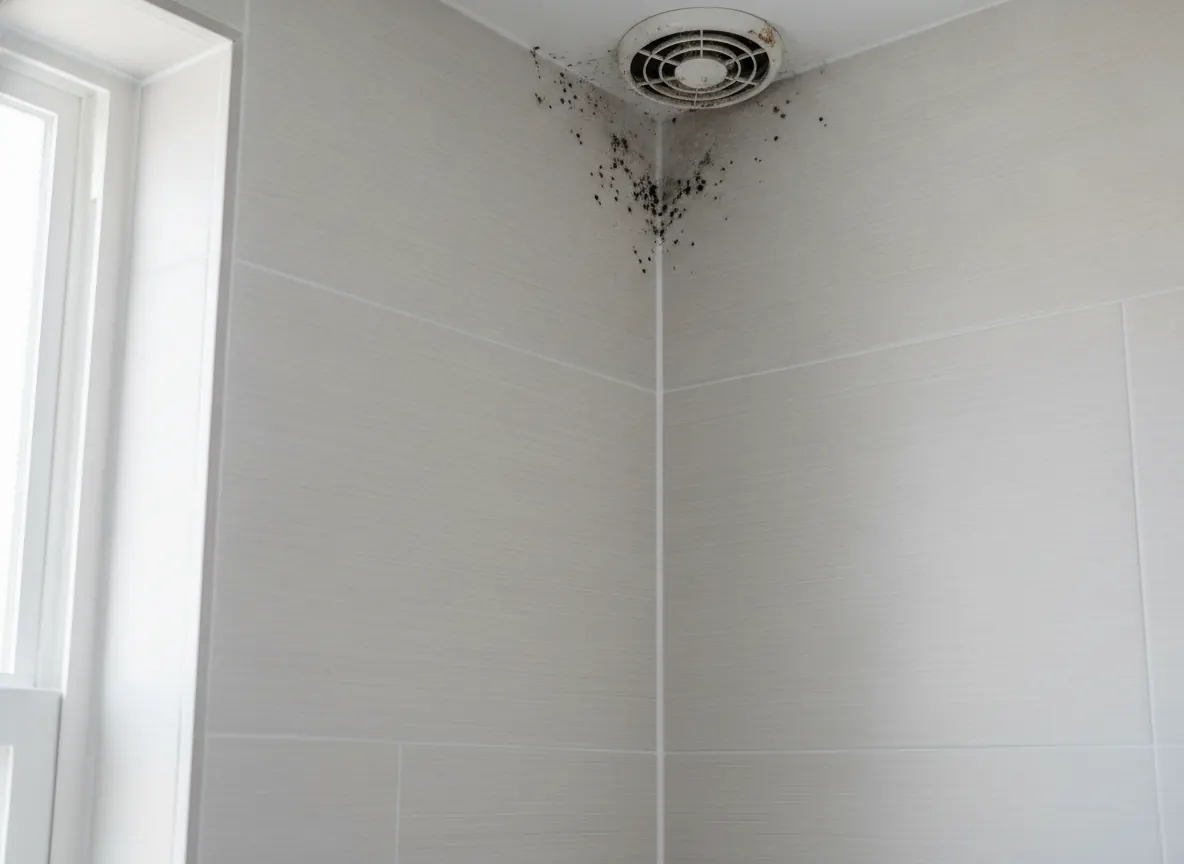
You scrub the shower, and a week later a pink or orange ring is back around the drain, along the grout lines or on the bottom of the curtain liner. Most people call it pink mold. In most cases it is not mold at all. It is usually a film of bacteria, often identified as Serratia marcescens, that feeds on soap and shampoo residue on surfaces that stay wet.
That matters for what you do next. A pink film is a cleaning and drying problem. Black, green or gray spots that come back in caulk, on the ceiling or on painted walls are more likely real mold, and they can point to a moisture problem that cleaning alone will not solve. This guide covers both, with a San Diego, CA angle on why bathrooms here stay damp in a dry climate.
The short version. Pink slime that wipes off with a brush is usually bacteria. Clean it, rinse, dry the surface and improve ventilation. Get the bathroom looked at if you see dark spots that come back, peeling paint, soft drywall, loose tiles or a stain on the ceiling below.
What is the pink stuff in my shower?
The pink or orange coating you see is usually a bacterial biofilm: a thin, slimy layer that forms where water sits and soap residue collects. Common spots are grout lines near the floor, the drain ring, caulk at the base of the tub, the soap dish, the toilet bowl waterline and the hem of a vinyl liner.
It has a few tells:
- It looks slimy or filmy, not fuzzy or spotted.
- It sits on the surface and usually wipes or scrubs away.
- It comes back fast, often within days, in the same wet spots.
- It shows up where water pools rather than spreading across the ceiling or walls.
Mold tends to look different. It shows as black, dark green or gray spots, often in clusters, and it can grow into caulk and grout so that scrubbing only lightens it. On ceilings and painted walls it may look like speckling or a gray haze.
Why San Diego bathrooms grow it in a dry climate
San Diego is not a humid-climate city by rainfall. Lindbergh Field averages 9.79 inches of rain a year, and about 83% of it falls November through March (NOAA 1991–2020 normals). A shower does not care about the weather outside, though. A family running two or three hot showers a day puts a lot of water into one small room.
Coastal air adds to it. Working from NOAA hourly normals for Lindbergh, early-morning relative humidity near the coast runs around 80% in summer. That figure is computed from normal temperature and dew point, so treat it as approximate. Morning showers in a closed bathroom with a cool exterior wall can leave surfaces wet for hours.
Other common reasons a bathroom stays damp:
- No exhaust fan, or a fan that is weak, noisy and rarely used.
- A window kept shut for privacy or during May Gray and June Gloom mornings.
- Shower doors and curtains left closed so the stall never dries.
- Bath mats, towels and liners that stay damp.
- Grout and caulk with gaps that hold water.
EPA advises keeping indoor humidity below 60 percent, ideally between 30 and 50 percent, if possible. A cheap hygrometer will tell you how your bathroom compares.
How to clean pink residue and keep it from coming back
- Scrub it off. Use a household bathroom cleaner and a stiff brush or old toothbrush on grout and caulk lines. Follow the label, open the window or run the fan, and never mix bleach with ammonia or other cleaners.
- Rinse and dry. Rinse away loosened residue, then wipe the area dry. Drying is the step most people skip.
- Deal with the liner and accessories. Wash or replace the curtain liner. Clean the soap dish, caddy and toy bins, which collect water underneath.
- Clean the drain ring. Remove the drain cover if you can and scrub the rim and the top of the pipe.
- Change the habits. Run the exhaust fan during the shower and for a while after, squeegee the walls, leave the door or curtain open, and hang towels to dry outside the stall.
Pink film will probably return now and then, because shower surfaces are wet by design. The goal is to keep it to a quick weekly wipe instead of a stubborn coating.
When to worry: signs it is a mold or leak problem
Look past the pink ring for these signs. Any one of them suggests something beyond routine cleaning:
- Black or dark green spots in caulk or grout that come back after scrubbing.
- Spots or a gray haze on the ceiling, especially above the shower.
- Peeling or bubbling paint, or drywall that feels soft when you press it.
- Loose or hollow-sounding tiles, or grout that crumbles.
- A musty smell that lingers after the room dries.
- A stain on the ceiling of the room below an upstairs bathroom.
Soft walls and loose tiles often mean water is getting behind the surface through failed grout, caulk or a valve leak. That is the case where mold can grow out of sight. Our bathroom and shower mold guide covers what companies check, what the work usually involves and how to compare quotes.
A note on testing: CDC does not recommend mold testing, and says that no matter what type of mold is present, you need to remove it. You also do not need a lab to tell you a pink film is bacteria. Testing is worth it mainly when you need a written record, for example for a landlord, buyer or insurer.
Health questions
CDC says that for some people, mold can cause a stuffy nose, sore throat, coughing or wheezing, burning eyes, or skin rash, and that people with asthma or who are allergic to mold may have severe reactions. If anyone in the home has health concerns about a damp bathroom, mold or bacteria, ask a doctor. This article is general information, not medical advice.
What bathroom mold work costs
If it turns out to be real mold behind the surface, published national estimates for bathroom mold remediation run about $500–$1,500 (Fixr, Aug 2025) and $500–$1,000 (This Old House, Mar 2026). Those are not quotes. Jobs that open walls or replace a shower pan can cost more, and the rebuild is often a separate line. See the San Diego mold remediation cost guide for the full table.
In the City of San Diego, a tub-for-tub or shower-for-shower replacement is on the list of work exempt from a building permit (DSD Information Bulletin 203, July 2024). Plumbing changes, larger drywall replacement and historic homes have their own rules, so the company you choose should confirm with Development Services or your city.
If you hire someone, check this first
California does not license mold inspection or remediation as its own trade, so checking credentials is up to you. The CSLB classification list has no mold class. Before you sign, ask for:
- A CSLB license number for any job of $1,000 or more, any job that needs a permit, or any job with a crew. Look it up at cslb.ca.gov.
- IICRC or ACAC certification for the people doing the work, which you can check on iicrc.org and acac.org.
- A current insurance certificate.
- A written scope and protocol: what gets removed, cleaned and dried, and how the work area is contained.
- A plan for the moisture source, whether the company fixes it or a plumber or roofer does.
- Independent clearance testing after the work, from someone other than the remediation company, if you want proof it is done.
- A written contract for any home improvement job over $500 (Business and Professions Code 7159).
Frequently asked questions
Is pink mold in the shower actually mold?
Usually not. The pink or orange film is most often a bacterial biofilm, commonly identified as Serratia marcescens, that grows on soap residue in wet spots. It scrubs off and comes back where water sits. Black or green spots that return in caulk are more likely real mold.
Why does pink residue keep coming back after I clean?
Shower surfaces stay wet and collect soap residue, so the film regrows. Rinse and dry after cleaning, run the exhaust fan during and after showers, squeegee the walls, and wash or replace the curtain liner.
When should I call a mold company about my shower?
When you see dark spots that return after scrubbing, mold on the ceiling, peeling paint, soft drywall, loose tiles or a stain below an upstairs bathroom. Those signs suggest water behind the surface rather than a cleaning issue.
Do I need to test the pink stuff in my shower?
Usually not. CDC does not recommend mold testing and says any mold should be removed. Testing mainly helps when you need a written record for a landlord, buyer or insurer.
San Diego Mold Experts is a free quote service, not a mold company. You describe the problem once, and independent mold inspection and remediation companies serving San Diego, CA and nearby San Diego County towns may reply with quotes. Companies may pay to receive requests or calls, and they reply on their own schedules. Request free quotes or call (619) 489-9035.